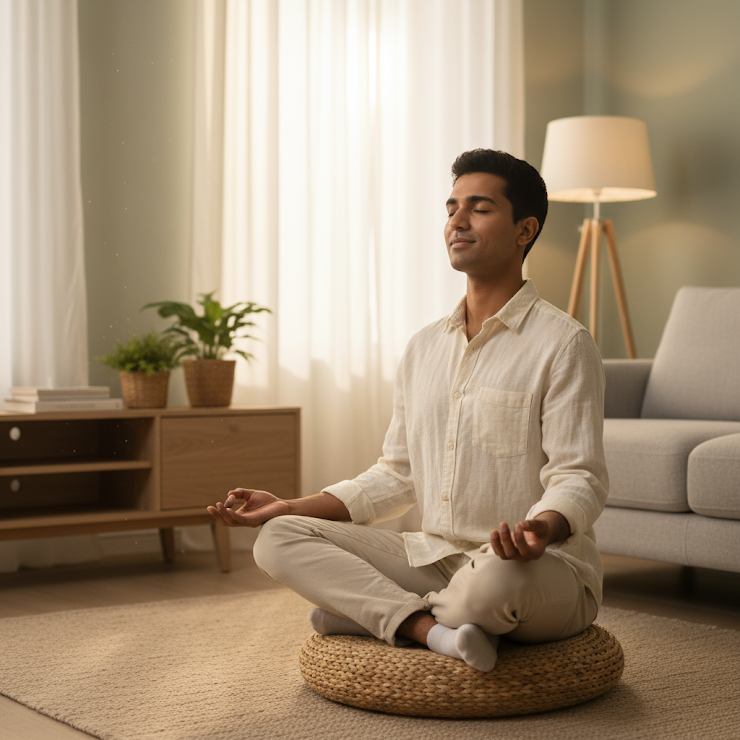
What are Breathing Exercises, How are They Done? Step by Step Guide
Sometimes, even when everything seems fine on the surface, you may notice that your body feels tense and your mind refuses to slow down. In moments like these, the most overlooked yet powerful tool is often the breath itself. Breathing exercises are not simply relaxation techniques; they are evidence-based practices designed to help regulate stress, reduce anxiety, and restore balance between the mind and body. When practiced correctly and consistently, they have a calming effect on the nervous system and support emotional stability. Mental health professionals emphasize that breathing techniques do more than create physical relaxation they also play a meaningful role in emotional regulation. In this step-by-step guide, we will explore what breathing exercises are, how to practice them effectively, and how they can support both mental and physical well-being in daily life.
Breathing exercises have many benefits. These benefits include:
Stress Reduction: Breathing exercises help to calm down and relax the mind.
Increased Concentration: Regularly practiced breathing techniques assist in focusing the mind.
Emotional Regulation: They improve mood by balancing emotional fluctuations.
Physical Relaxation: They reduce muscle tension and provide physical relaxation.
Support for the Digestive System: Taking deep breaths can positively affect the functioning of the digestive system.
How to Do Breathing Exercises?
It is quite simple to practice breathing exercises. You can easily perform breathing exercises by following the steps below:
1. Choose a Comfortable Environment
Select a quiet and comfortable place for your breathing exercises. This area should be free from external factors that might distract your mind.
2. Sit or Lie Down
You can sit in a comfortable position or lie down. Make sure your spine is straight. Allow your hands to rest comfortably on your lap or by your sides.
3. Close Your Eyes
Close your eyes to achieve greater concentration. This helps your mind focus on the exercise.
4. Take a Deep Breath
Inhale deeply through your nose, allowing your abdomen to expand. Focus on the airflow entering your nostrils. During this time, feel the flow of air.
5. Hold Your Breath
After inhaling, hold your breath for a few seconds. This duration should typically be between 3-5 seconds. Try to feel calm while holding your breath.
6. Exhale Through Your Mouth
Exhale slowly and controlled through your mouth. As you exhale, imagine releasing the stress and tension in your mind. Focus on your abdomen retracting as you breathe out.
7. Repeat
Repeat this process 5-10 times. Each time you can gradually increase the duration without feeling more discomfort.
Different Breathing Exercise Methods
There are various methods of breathing exercises. Below are examples of these methods:
4-4-4 Breathing Technique: Inhale deeply through your nose for 4 seconds, hold for 4 seconds, and exhale through your mouth for 4 seconds.
Diaphragmatic Breathing: Focus on breathing in and out with your abdomen; this allows your diaphragm to work fully.
Yogic Breathing: Breathing exercises done in specific positions and rhythms aim to rest both the body and the mind.
Apply at Appropriate Times
It will be beneficial to practice breathing exercises during a stressful day, during meditation, or before sleeping. You can perform short but effective breathing sessions at any time.
Conclusion and Recommendations
Breathing exercises are a simple yet effective method that can help us feel better. Adding these exercises to your daily routine may enhance your ability to cope with stress and improve your overall health. Remember, every individual's breathing habits are different. Therefore, it is important to try different methods to discover what works best for you.